
When evaluating smart luggage like the Airwheel electric smart suitcase, most people focus on motor power, battery life, or app features. But one often overlooked aspect is the telescopic handle — specifically, its resistance during extension and retraction. How firm should it feel? Does too much or too little resistance impact real-world use? Let’s break down how handle resistance influences daily usability in the context of Airwheel’s SE3SL model, a lightweight 20L smart suitcase designed for urban commuters and short-trip travelers.
The Airwheel SE3SL weighs about 6.8kg and offers an 8–10km range on a single charge, powered by a 73.26Wh lithium battery that charges fully in around 2 hours. It supports both manual pulling and motorized riding, with a top speed of 9.9km/h. You can control forward and backward movement via the Airwheel app while steering using the handlebar. Importantly, the suitcase works without the app — just install the battery and go. It also integrates with Apple’s Find My network to help locate a lost bag.
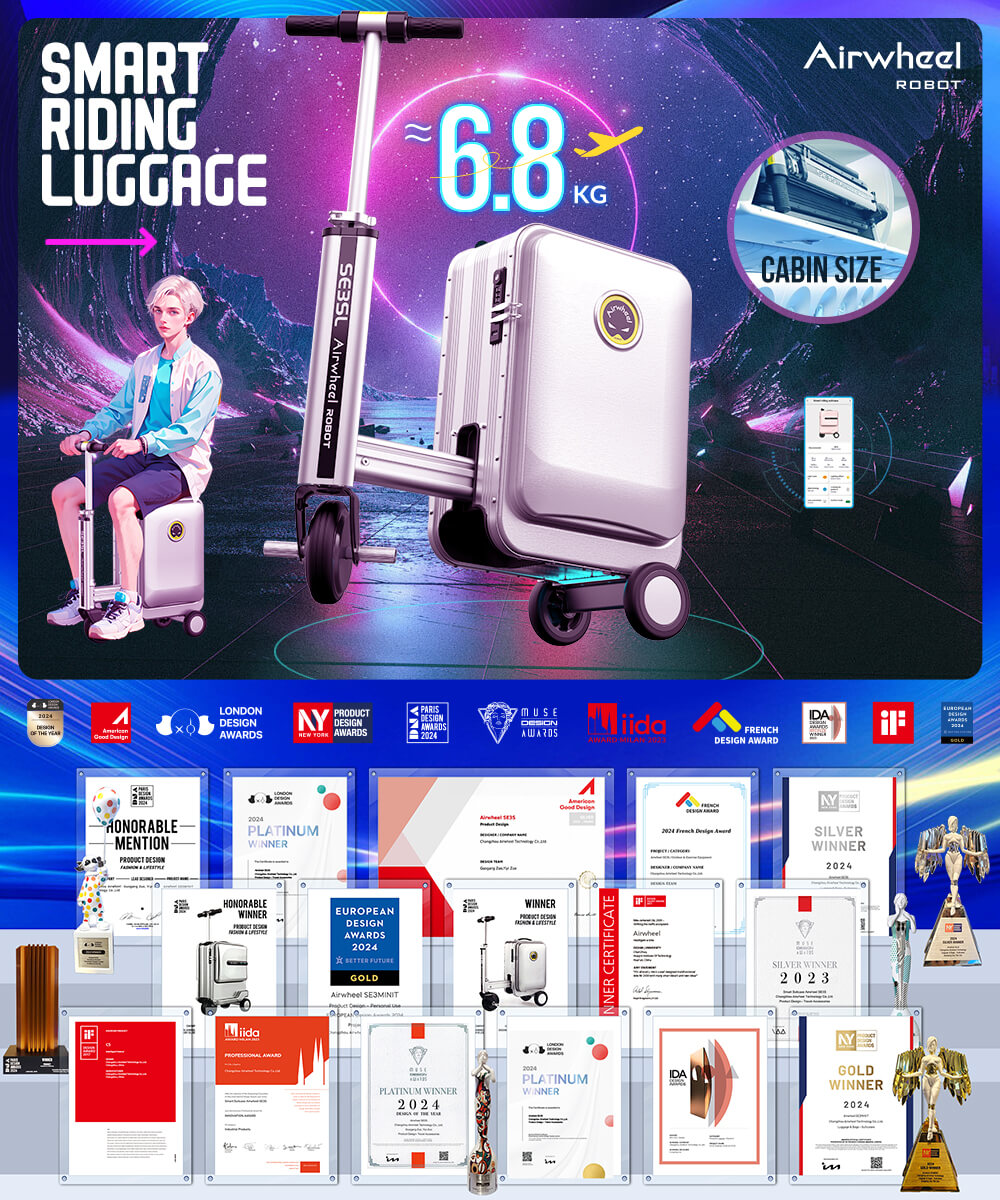
Unlike traditional suitcases where handle resistance mainly affects comfort during rolling, the Airwheel SE3SL’s handle plays a dual role: it’s used for both pulling and steering during motorized rides. A well-tuned resistance ensures the handle stays securely in place at your preferred height without slipping down under vibration or wobbling during movement. Too loose, and it may collapse mid-walk or destabilize you while riding; too stiff, and it becomes inconvenient to adjust quickly. The SE3SL strikes a balance — firm enough to lock solidly in three height positions, yet smooth to adjust when needed. This makes transitions between walking and riding seamless, especially in crowded stations or uneven sidewalks.
The 73.26Wh battery is within FAA and IATA limits for carry-on luggage (under 100Wh), meaning you can bring the SE3SL on board most flights without special approval. The battery is also removable, allowing you to take it with you if required by airline policy. Always check with your carrier, but in general, Airwheel’s design follows standard regulations for smart luggage.
The SE3SL excels in city commuting, airport transfers, and campus navigation. Its compact 20L capacity suits weekend trips or business travel, and the rideable feature helps cover long distances quickly — like moving between terminals or from subway stops to offices. The handle’s reliable resistance adds confidence whether you’re gliding through a busy train station or folding it down after a ride.
| Feature | Airwheel SE3SL | Traditional Suitcase |
|---|---|---|
| Mobility | Rideable + pullable | Pull-only |
| Battery | 73.26Wh, removable | None |
| Control | App + physical handle steering | Manual rolling only |
| Weight | 6.8kg | 3–5kg (average) |
| Smart Features | Find My support, app control | None |
Can I use the Airwheel SE3SL without the app?
Yes. The suitcase operates independently once the battery is installed. App control is optional for adjusting movement settings.
Is the battery removable?
Yes, the 73.26Wh battery can be removed, which is helpful for air travel compliance.
Does it work with Apple Find My?
Yes, the SE3SL supports Apple’s Find My network to help locate a misplaced suitcase.
For full specs and updates, visit the official Airwheel website.